
MESSY RESILIENT? / SPEAKERS
Presenter
Iderlina MATEO-BABIANO
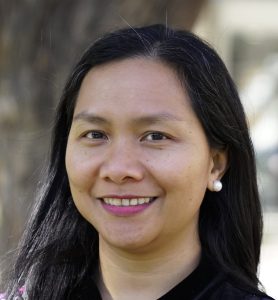
Associate Professor in Urban Planning, University of Melbourne
Parkville VIC 3010, Australia
Presentation: Messy islandness in the context of a changing climate: A feminist exploration of Dawahon (Leyte, Philippines)
Dawahon island is a high density floating barangay1 in the Philippines. A five hectare land mass that is home to 4,000 residents, people living in the island face the double burden of intensifying climate impacts and increasingly, socioeconomic challenges. Once the seaweed capital of the Eastern Visayas region, rising sea temperature driven by climate change has threatened their main livelihood, lowering community yield and productivity. While still recovering from Typhoon Odette’s infrastructure damages, the island continues to be persistently challenged by a lack of basic access to water and electricity and being largely dependent on exorbitantly-priced water coming from the main island and renewable solar energy for its power source. Women in the community have played a significant yet oftentimes hidden role as they continue to look for alternative livelihoods to support their families and the community. This paper explores Dawahon’s urban messiness by adopting a feminist lens to examine bottom-up, self-organized place-based initiatives led by women to highlight women’s placemaking role in coastal community governance, the aquaculture economy, and disaster recovery. The aim is to recognise marginalised perspectives and making the invisible visible.
Bio: Derlie is Associate Professor in Urban Planning at the Faculty of Architecture, Building and Planning (ABP), the University of Melbourne. She is a key figure in the fields of placemaking, active mobility, and urban design. She is a notable member of the award-winning Place Agency, renowned for its delivery of the Placemaking Sandbox, a comprehensive research and educational program on placemaking, place leadership and place development aimed at graduate-level students and emerging placemakers. Dr Mateo-Babiano is committed to fostering and embedding diversity and inclusion in the built environment discipline, leading the development of the faculty’s first-ever Diversity and Inclusion Action Plan. Her commitment to gender inclusion has led her to establish the Women in Transport leadership (WiTL) knowledge network (www.witl.info). Her research contributions extend to the advancement of knowledge concerning streets as places, active transport (walking and cycling), and gender issues in transportation, with far-reaching theoretical and policy implications within both the Australian and Asian settings. Her books are COVID-19 and informal workers in Asian cities: Impact, response, and implications for urban recovery (Routledge, 2023), Placemaking Sandbox: Emergent Approaches, Techniques and Practices to Create More Thriving Places (Palgrave, 2020) and Parking: An International Perspective (Elsevier, 2020). Derlie teaches and coordinates the subjects urban Design for People and Places, Cities without Slums and Placemaking for the Built Environment, demonstrating her committment to diversifying the educational experience and building the capacities of built environment students and professionals to become global citizens, enabling them to contribute to the shaping of a more just, inclusive and sustainable global community.