
MESSY RESILIENT? / SPEAKERS
Presenter
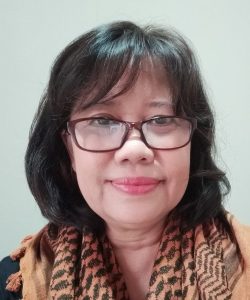
Herlily
Universitas Indonesia
Jl. Lingkar, Pondok Cina, Kecamatan Beji, Kota Depok, Jawa Barat 16424, Indonesia
Presentation: Claiming Interstitial Spaces: Interrogating dwelling / working places through the struggle of Rasdullah
This project will examine the spatial trajectories of Jakarta’s rickshaw (becak) drivers to unveil their everyday spatial practices, both dwelling/working and the spaces in between. In 2002, Rasdullah, the chairman of the Serikat Becak Jakarta (Sebaja), Jakarta’s rickshaw driver union, was applauded after he was nominated as a Jakarta gubernatorial candidate against the incumbent Governor Sutiyoso. Becak drivers, who were among the poorest residents in Jakarta, assert that this act was their symbolic statement to convey the message that public officials should side with the urban poor. Becak have been systematically banned since the 1980s yet they were massively disposed of to ‘modernize’ the city in Sutiyoso’s Jakarta in the 2000s. However, in West and North Jakarta, thousands of becak are still cycling, negotiating their ‘care work’ service routes, playing ‘hide and seek’ with the authorities. Their dwelling spaces are also challenged, navigating between available interstitial spaces such as along railway banks, under the toll road and the like. The struggle of Rasdullah, both personally and collectively through the Sebaja Union discloses the resilience of becak drivers across time and space, intersecting with regime, infrastructure and technology to form a unique urban assemblage.
Bio: Herlily is a senior faculty member in the Department of Architecture at Universitas Indonesia. She is trained in architecture, urban design, and environmental design in developing countries. She teaches urban theory courses and architectural/urban design studios in the Department of Architecture, Faculty of Engineering, and previously the Urban Studies Program at the Graduate School of Sustainable Development, Universitas Indonesia. Her research interests include urban informality, housing struggles, discourse on urban theory, and questions around spatial justice, urban space, and power in the Global South. She is also very active in participatory action research and community engagement, collaborating with local NGOs to facilitate the right to adequate housing.