
MESSY RESILIENT? / SPEAKERS
Presenter
Elizabeth MALY
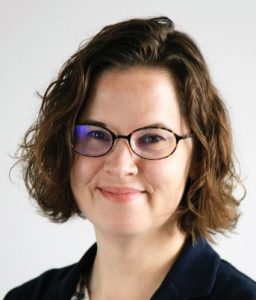
Professor, Tohoku University; International Research Institute of Disaster Science (IRIDeS)
2 Chome-1-1 Katahira, Aoba Ward, Sendai, Miyagi 980-8577, Japan
Presentation: Dirt-y resilience: growing from the ground up after Japan’s 3.11 disaster
In response to massive damage caused by the 3.11 Great East Japan Earthquake, tsunami, and nuclear disaster on March 11, 2011, a strong principle of hazard mitigation guided Japan’s government-driven reconstruction. Physical recovery of tsunami-affected areas relied on collective residential relocation for disaster mitigation, providing new residential land inland or at higher elevation, and allowing municipalities to purchase homeowners’ former land and convert it non-residential uses. Across the tsunami-affect coastal region, these programs created significant land areas “emptied” of residents and homes, now including parks and open areas. Radioactive contamination from the nuclear accident at the Fukushima Daiichi Nuclear Power Plant led to large-scale evacuation. Even in areas where evacuation orders have been lifted, the current population 15 years later is a small fraction of pre-disaster communities; there are still areas where people are not allowed to live. Contexts differ from post-tsunami and post-nuclear “vacated” land, yet both have been emptied of people. Both areas are also sites of various community-based efforts and individuals involved in growing or cultivating plants, caring for flowers, vegetables, or trees. Often emerging spontaneously, an exploration of how these localized activities have grown and transformed offers hints for supporting community connections, adaptation, and resilience.
Keywords: Disaster, recovery, cultivation, growing, community
Bio: Liz Maly is a Professor at the International Research Institute of Disaster Science (IRIDeS) at Tohoku University in Sendai, Japan. She holds a Master of Architecture from the University of Washington-Seattle and a PhD in Architecture from Kobe University. With the theme “People-Centered Housing Recovery,” her research focuses on post-disaster housing reconstruction and community-based recovery planning, including green placemaking, and how memories of disasters are recorded and transmitted. Her research in the U.S., Indonesia, the Philippines, and Japan has looked at how housing recovery policies and implementation can better support local residents and communities for their life and livelihood recovery.